Like-Kind Property Definition in 1031 Exchanges
The IRS lets you swap almost any U.S. real estate for almost any other.
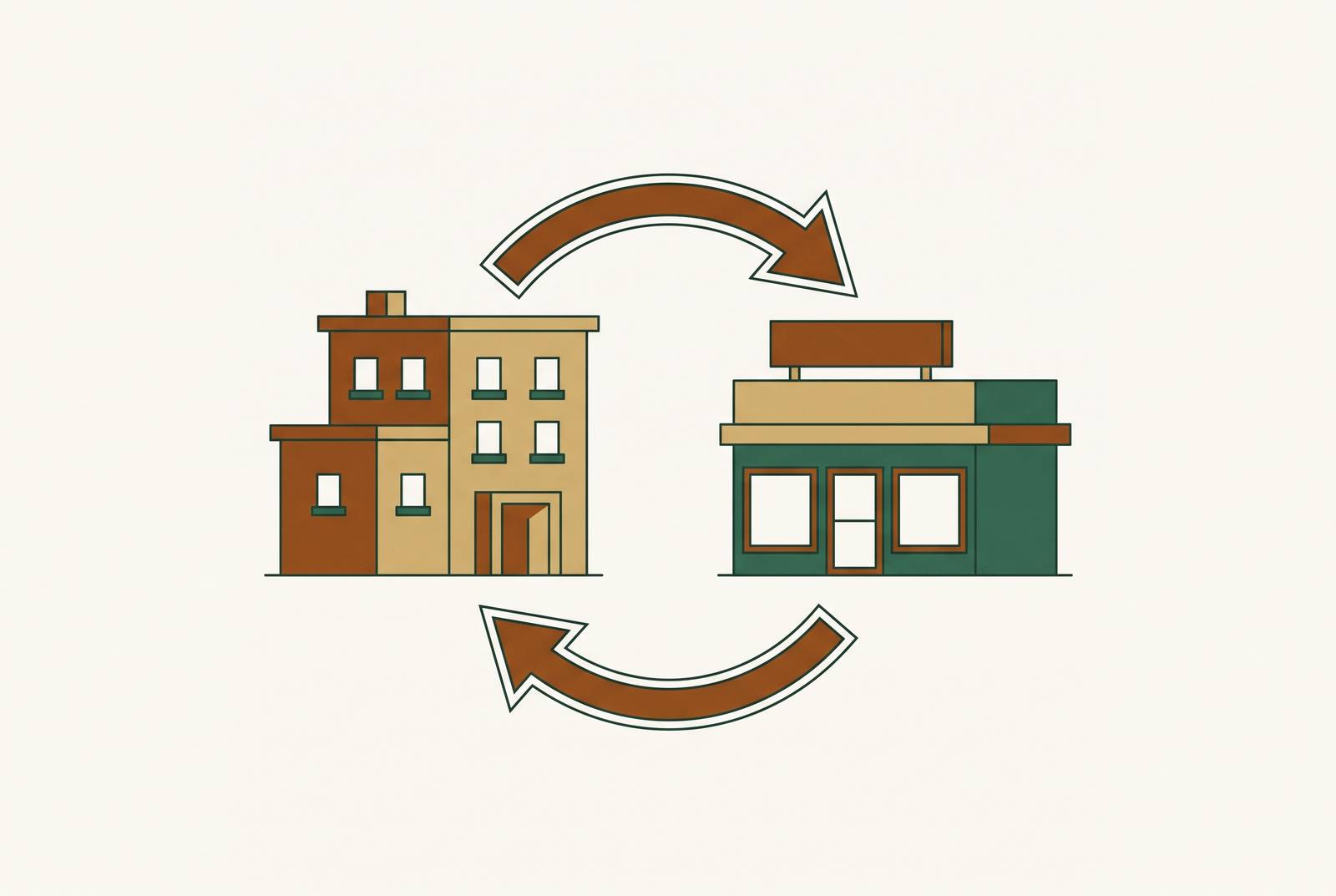
Most investors read "like-kind" and assume it means similar property types: apartments for apartments, retail for retail, one asset class staying in its lane. That reading is wrong, and it's costing people deals. The IRS standard is far broader than the phrase suggests: almost any U.S. real property held for investment or business use qualifies as like-kind to almost any other. Investors who assume otherwise narrow their own search before the rules ever force them to, and that's a self-inflicted cost with no offsetting benefit.
What "like-kind" actually means under the IRS definition
Treasury Regulation §1.1031(a)-1(b) defines like-kind as referring to the nature or character of property, not its grade or quality. That distinction carries the entire test. Improved versus unimproved, new versus old, high-value versus low-value: none of it matters. A vacant lot is like-kind to a fully leased office building because the absence of improvements is a quality difference, not a character difference.
The practical result is that nearly all U.S. real property held for investment or productive use in a trade or business is like-kind to all other U.S. real property held for the same qualified use. Eligibility comes down to two prongs. First, qualified use: both the property given up and the property received have to be held for investment or for productive use in a business. Second, like-kind itself, a bar that nearly every combination of U.S. real estate clears without issue.
One ceiling doesn't bend, though. U.S. real property is never like-kind to property located outside the United States. Domestic stays domestic. That isn't a quality judgment, it's a jurisdictional line written into the statute itself.
The TCJA shift that narrowed the universe of eligible property
Section 1031 didn't always apply only to real estate. Before the Tax Cuts and Jobs Act of 2017, like-kind exchange treatment covered a much wider range of property, including vehicles, aircraft, and business equipment. The provision dates back to 1921, enacted to encourage reinvestment broadly, not just in land and buildings.
TCJA changed that, effective for exchanges completed after 2017. Section 1031 now applies to real property only. Personal property, no matter how central it was to a business, lost eligibility entirely. Exchanging one partnership interest for another was never permitted, and that exclusion remains untouched.
Most people who complain about the change have the story backwards. The narrowing actually clarifies things for real estate investors, because the boundary is now a clean binary: real property or not. Once a transaction clears that threshold, the like-kind test inside the real estate category is about as permissive as a tax rule gets. Anyone who still thinks of 1031 as a shrinking, restrictive tool is fighting the last war.
What real property qualifies: a working inventory for investors
Land and the improvements built on it both qualify: inherently permanent structures, along with structural components like walls, floors, and ceilings. Water and the airspace above it, sometimes called superjacent airspace, count too, which is why boat slips at a marina show up as valid 1031 property. Unsevered natural products of land, growing crops, timber, minerals still in the ground, wells, qualify only while attached to the land. Once severed from the land, those natural products no longer qualify.
Several intangible interests in real estate also qualify: fee ownership, tenant-in-common interests, leasehold interests of 30 years or more (treated as like-kind to a fee simple interest), and certain other intangible interests tied to real property.
Cross-type exchanges are where the breadth of the rule becomes obvious, and where investors leave the most value on the table by not knowing it exists. Farmland can trade for a fully improved commercial building. Oil and gas royalty interests can trade for a working ranch. Residential rental property can trade for industrial or retail space, and the reverse works just as well. A rental ski condo can become a three-unit apartment building. Wetland mitigation credits can trade for other mitigation credits. A vacant lot held purely for appreciation can become an occupied commercial property generating rent from day one.
One local wrinkle applies across all of it: the property has to qualify as real property under the law of the state or jurisdiction where it sits at the time of the exchange. State definitions vary at the margins, so that's worth checking before assuming an asset clears the bar.
What does not qualify: the actual disqualifiers investors need to know
Dealer property is out. Anything held primarily for sale, flips, inventory, spec-built homes sold on completion, gets excluded under IRC §1031(a)(2). Intent and holding pattern control this determination, not the physical characteristics of the property.
Primary residences and property held for personal use don't qualify either, regardless of what the owner plans to buy as a replacement. A financial-instruments category is fully excluded too: stocks, bonds, notes, other evidence of indebtedness, certificates of trust, and interests in a partnership. REIT shares fall into this bucket as well. Only direct ownership of real property can qualify, never shares in a REIT. Choses in action, meaning a right to collect money or property through legal proceedings, are excluded. So is business goodwill, since the goodwill of one business has no like-kind relationship to the goodwill of another.
Cryptocurrency and other digital assets don't qualify, full stop, and no amount of creative structuring changes that.
One of the most consequential mistakes investors make is timing, not asset type. Selling a property for cash and later, on your own initiative, reinvesting the proceeds into another qualifying property does not make it an exchange. However well-intentioned the reinvestment, the sale and purchase have to be part of one integrated, structured exchange plan from the start. Decide to do a 1031 after the sale has already closed, and there's no fixing it after the fact.
The qualified-use requirement and why investor intent is the controlling test
Meeting the like-kind test isn't the finish line. Both properties, the one sold and the one bought, have to be held for investment or for productive use in a trade or business. That requirement is non-negotiable, and it sits independently from the like-kind analysis.
What makes this test unusual is whose intent actually matters. The controlling question is the exchanger's own purpose, not what the buyer plans to do with the relinquished property or what the seller was doing with the replacement property before the sale. Two people can transact on the exact same building for entirely different reasons, and only one side's intent gets scrutinized in each respective exchange.
A personal residence never qualifies for exchange treatment, even where the owner intends to convert it into a rental down the road. Timing on that kind of conversion is fact-specific and gets evaluated closely. Property acquired with a quick flip in mind, rather than genuine investment intent, fails the qualified-use test even if it's textbook real property in every other respect. An investor who buys a replacement property planning to turn it around fast is exposing the entire exchange to challenge on use grounds, no matter how clean the paperwork looks. Like-kind status was never sufficient on its own, and treating it as the only box to check is how exchanges unravel on audit.
Personal property mixed into a real estate deal and the 15% safe harbor
Plenty of real estate deals aren't pure real estate. A furnished apartment complex comes with furniture. A hotel sale comes with beds, fixtures, kitchen equipment, sometimes an entire operating inventory. Since TCJA stripped personal property out of Section 1031 eligibility, bundled personal property raises a real question: does it taint the whole exchange?
Treasury regulations answer with a safe harbor. Under Regs. Sec. 1.1031(k)-1(g)(7)(iii)(B), if the personal property transferred alongside the real property doesn't exceed 15% of the replacement real property's fair market value, its presence doesn't disqualify the real estate exchange. The 15% figure is measured against the replacement property's value, not the value of what was sold.
Cross that threshold and the excess isn't a disqualifying event so much as a partially taxable one: exceeding the threshold can affect the tax treatment of that personal property portion, while the real property exchange itself may stay intact. For asset-heavy deals, hotels, furnished short-term rentals, equipment-dense commercial buildings, running an allocation analysis before closing isn't optional due diligence. It's the only way to know in advance whether the deal quietly crosses that 15% line, and skipping it is how investors get an unpleasant surprise at tax time instead of at the closing table.
How boot works when the exchange isn't perfectly matched
Boot is any money or non-like-kind property an investor receives as part of the exchange. A fully tax-deferred exchange demands two things: every dollar of net proceeds from the sale gets reinvested into replacement property, and the replacement property's fair market value equals or exceeds what was sold.
Miss either condition, and the shortfall becomes boot, taxed as capital gain up to the amount of the gap. That doesn't blow up the exchange, though. It converts what would have been a fully deferred transaction into a partial one, taxable only on the boot amount, with the rest of the gain still deferred. Loss treatment stays protected too: even where boot shows up, any loss on the relinquished property is still deferred, not immediately recognized.
Investors who need cash out of the sale but don't want to sacrifice deferral should reach for refinancing, not boot. Pulling equity out of the replacement property through debt after the exchange closes keeps the exchange fully intact while still getting liquidity into the investor's hands. Treating boot as a deliberate cash-out strategy, rather than an unavoidable leftover, is a needless tax bill.
One more structural rule sits underneath all of this. The taxpayer who sells the relinquished property generally has to be the same taxpayer who acquires the replacement property, and the identity match is strict.
Multi-property exchanges and how the like-kind rules apply across several assets
Exchanges don't have to be one-for-one. A single relinquished property can roll into two or more replacement properties, and multiple relinquished properties can consolidate into a single replacement. Both directions are permitted, and both follow the same clock: a 45-day identification window and a 180-day closing deadline, both triggered by the closing of the first relinquished property.
That timing detail matters more in multi-sale exchanges than most people expect. Once the first property closes, the 180-day countdown starts, and every subsequent relinquished property sale has to close within that same window. Selling several properties in sequence while staying inside one shared deadline is a real logistical squeeze, not a formality, and it's where multi-property exchanges most often fall apart in practice.
Basis allocation across multiple replacement properties follows a proportional method under Regs. Sec. 1.1031(j)-1(c): carried-over basis gets divided among the replacement properties in proportion to each one's relative fair market value. The like-kind test itself still applies property by property. Each replacement asset has to independently satisfy both the like-kind and qualified-use requirements, though the cross-type flexibility discussed earlier still applies in full: farmland can be relinquished in exchange for one apartment building and one separate commercial property, so long as each piece clears the test on its own.
Identifying replacement properties within the 45-day window runs under three named rules, and picking the wrong one is a common unforced error. The 3-Property Rule allows identifying up to three properties of any value. The 200% Rule allows identifying any number of properties, subject to a cap on their combined value relative to what was sold. The 95% Rule allows identifying unlimited properties but imposes a stringent acquisition requirement on the back end, a bar high enough that this rule sees limited use in practice. For most investors identifying more than three candidates, the 200% Rule is the one that actually fits; reaching for the 95% Rule without a near-certain closing plan is asking for a blown exchange.
Where the QI fits into a like-kind exchange and why the choice of intermediary matters
A qualified intermediary has to be engaged before the first closing takes place, not after. Setting one up once the relinquished property has already sold disqualifies the exchange entirely, no exceptions.
The QI exists to solve a specific legal problem: constructive receipt. If exchange proceeds pass through the investor's hands directly, even briefly, the IRS treats that as receipt of the funds, and the exchange is dead on the spot, with full capital gains tax due. The QI holds those proceeds instead, and by regulation has to be a genuinely unrelated third party. Attorneys, CPAs, and real estate brokers who already have a business or agency relationship with the investor are disqualified from serving in that role, and so are family members.
This is also an industry with almost no federal oversight, and that's the part investors underweight most. There's no licensing requirement and no mandatory credential to hold yourself out as a qualified intermediary, which means the range in competence and financial controls between intermediaries is wide. According to reporting by 1031specialists.com, the Federal Trade Commission was aware of 23 instances where investors lost an estimated $250 million as a result of fraud and negligence by qualified intermediaries. That's not a rounding error, and it should end any debate about whether picking a QI on price alone is a reasonable strategy. Due diligence on the intermediary deserves the same scrutiny as due diligence on the replacement property; treating the QI choice as an afterthought is, without exaggeration, the riskiest habit in the entire exchange process.
Exchange funds belong in segregated, individually titled accounts, not commingled with a QI's operating funds or other clients' exchange proceeds. FDIC coverage limits and account structure both matter here, in ways that are easy to overlook until something goes wrong. There's a quieter economic issue too: exchange funds sit for weeks at a time, earning interest, and many traditional QIs simply keep that interest for themselves rather than passing it to the investor whose money generated it. Whether an investor sees any of that interest depends entirely on the terms of the exchange agreement, a detail worth negotiating before signing, not after the funds are already sitting in escrow.