Improvement 1031 Exchange for Property Upgrades
The clock on a 1031 improvement exchange starts before investors are actually ready to build.

An improvement 1031 exchange lets an investor use exchange proceeds to buy and upgrade a replacement property before ever taking title to it, closing the gap between what a property is worth as-is and what it needs to be worth to defer the full tax bill. It is the most operationally demanding structure in the 1031 family, and it fails constantly for a reason that has nothing to do with tax law: investors start the clock before the construction plan is real. That failure is preventable. It requires understanding exactly where the pressure comes from and refusing to touch the 45-day window until permits, contractor, and budget are already lined up.
The structure is called an improvement 1031 exchange, sometimes referred to as a build-to-suit or construction exchange. An Exchange Accommodation Titleholder (EAT) takes title to the replacement property while construction happens, and the Qualified Intermediary releases exchange funds to pay for the work as it is completed; only once improvements are finished does the EAT deed the property to the investor, with the upgraded value already built in. The most common failure point has nothing to do with the construction itself: investors open the 45-day identification window before permits, a contractor, and a detailed budget are in place, and the resulting timeline pressure kills the exchange before it gains any traction. Permits, a signed contractor agreement, and a defined scope of work need to be settled before the relinquished property closes, not after the clock has already started.
How the Exchange Accommodation Titleholder makes improvement exchanges legally possible
The core problem is structural. An investor cannot use exchange funds to improve a property once title has transferred; the moment that happens, the exchange is functionally over, and any money spent afterward on renovations counts as money that left the exchange and landed in the taxpayer's hands. That triggers gain recognition, which defeats the entire purpose of the transaction.
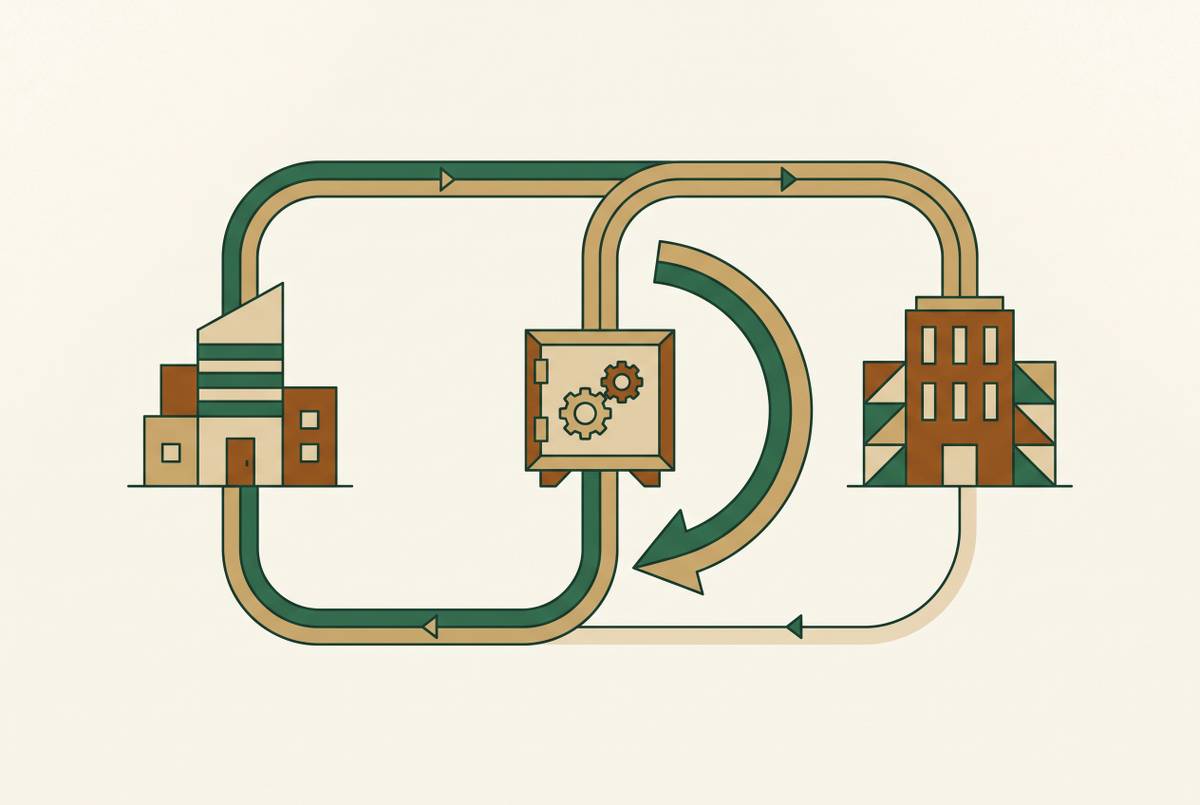
The fix is an Exchange Accommodation Titleholder, or EAT: a separate legal entity that holds title to the replacement property while construction happens. Revenue Procedure 2000-37 gave this structure the IRS's blessing, pre-approving the form of the transaction when it's built the way the agency prescribes. In practice, the investor identifies both the replacement property and the specific improvements planned for it within the 45-day window, the EAT takes title at closing instead of the investor, and the Qualified Intermediary releases exchange funds to pay for construction as the work gets done. Once the improvements are finished, and within the 180-day deadline, the EAT deeds the property to the investor, upgrade value already built in.
The investor still calls the shots on scope, contractors, and specifications throughout; title sits with the EAT in name only. Staying inside the safe harbor doesn't mean an exchange built differently is automatically disqualified, but it does mean giving up the pre-approval and inviting a level of IRS scrutiny most investors have no appetite for. A QI and an EAT are both required players here. They can be the same company wearing two hats, or two separate entities, but the functions have to stay distinct on paper and in practice. Any investor who lets that line blur is handing the IRS an easy argument, and there is no good reason to hand it one.
The 45-day and 180-day rules as they apply to improvement exchanges — and where the added pressure comes from
Both clocks start the day the relinquished property closes, no exceptions, no extensions absent a formal disaster declaration. That much is true of every delayed exchange. What makes the improvement exchange version harder is what has to happen inside those windows, and this is where most timelines actually break.
During the 45-day identification period, the investor has to name not just the replacement property but the improvements planned for it, and vague language doesn't cut it. "Renovate the building" invites disallowance; a new roof, HVAC replacement, and interior buildout with a rough budget attached is what the identification requirement actually calls for. Then comes the harder constraint: only work that is physically complete and in place before the EAT transfers title counts toward the replacement property's value. Improvements finished after the investor takes title aren't like-kind property at all, so they simply don't count. If construction is 80% done by day 180, only that 80% factors into the exchange value, and the equal-or-greater-value rule doesn't bend for unfinished work or budget overruns.
That's the real source of pressure, and it's the part investors underestimate most. A 180-day exchange sounds like six months to build something, but permitting alone can eat a third of that, and the usable construction window shrinks fast once legal, entitlement, and closing timelines get subtracted. For exchanges that start late in the calendar year, there's an added trap: the "earlier of" rule can cut the 180 days short if it collides with the investor's tax return due date. Filing an extension preserves the full window; forgetting to file one can quietly shave weeks off the deadline without anyone noticing until it's too late. Investors with property in a federally designated disaster area, Los Angeles County under 2025 IRS guidance being one recent example, may qualify for deadline relief, and that's worth confirming with a QI before the clock starts, not after.
What qualifies as an improvement and what does not
The category of qualifying work is broad: repairs, remodels, additions to existing structures, ground-up construction on vacant land, tenant improvements, façade work, infrastructure additions. All of it counts, provided it's real property, meaning structural, permanent, and attached to or part of the land or building.
What doesn't qualify matters just as much, and this is where investors lose value they thought they'd banked. Improvements to property the investor already owns are off the table entirely; exchange funds cannot touch a property already in the investor's hands, full stop. Work completed after the EAT transfers title doesn't count either, no matter how minor or how close to the deadline it falls. And since the Tax Cuts and Jobs Act narrowed 1031 treatment to real property only, personal property components like machinery, movable equipment, and similar items are excluded from the exchange entirely, even when they're part of the same project.
There's a useful complement in the bonus depreciation rules. The One Big Beautiful Bill Act reinstated permanent bonus depreciation and full expensing for qualifying components such as appliances, HVAC systems, and flooring. An investor who completes an improvement exchange may be able to depreciate those qualifying pieces immediately rather than over a multi-decade schedule, stacking one tax benefit on top of another. None of that changes the classification question, though. Before the exchange starts, a tax advisor should sort out exactly what counts as real property improvement and what doesn't, because misclassifying even part of the project can shrink the qualifying exchange value in ways that are hard to fix after the fact.
The four investment scenarios where improvement exchanges make the most strategic sense
Retail repositioning is the clearest case: an investor buys a dated retail property below market and uses exchange proceeds for tenant improvements and exterior upgrades before closing, unlocking higher rents or a stronger resale position without triggering tax on the sale that funded it.
Industrial expansion follows similar logic from raw ground. A taxpayer buys vacant land and constructs a warehouse or distribution facility within the exchange period, and the entire project cost, land plus construction, counts toward replacement value as long as it's finished in time.
Multifamily renovation covers an underperforming apartment building bought below its potential, with interior upgrades completed before title transfers; income potential rises while the tax bill on the original sale stays deferred. The customized build-to-suit scenario is the most ambitious of the four: vacant land acquired and a structure built to a specific tenant's exact specifications during the exchange window, sometimes with the lease already signed before the investor even takes title.
What ties these four together, and what separates the exchanges that work from the ones that don't, is the presence of a real, pre-existing plan: a defined scope of work, a construction timeline with real margin inside 180 days, a contractor ready to mobilize on day one. An investor who treats the 180-day window as time to figure out the project has already lost the exchange, regardless of how good the underlying deal looks. Reporting from IPX1031 on 2026 exchange trends points to constrained property inventory pushing more investors toward exactly this kind of flexible structure, since building the right replacement property can be more realistic than competing for one in a thin market.
Why do improvement exchanges fail, and what execution risks derail otherwise sound plans?
Construction delay is the single biggest risk, and it's rarely dramatic. A permit sits on a desk for three extra weeks. A contractor gets pulled onto another job. A material shipment stalls. None of that is exotic; all of it is common, and any of it can push completion past day 180, at which point only the finished portion of the work counts toward exchange value.
Cost overruns create a related but distinct problem: a value gap. If the finished property ends up worth less than projected, whether from overruns, scope cuts, or a miscalculated budget, the shortfall gets treated as boot and taxed accordingly. Unlike a standard delayed exchange, there's rarely room to course-correct once construction has started; the clock doesn't pause for a change order.
Identification specificity trips up more exchanges than most investors expect, and it's the most avoidable failure on this list. The IRS wants the planned improvements described with real precision in the 45-day filing, not general language about "upgrading" or "renovating" the property. A vague identification risks the improvement value being disallowed even if the work itself gets done on time and on budget. Fixing this costs nothing beyond writing the filing properly the first time. It happens constantly anyway.
Coordination complexity compounds all of it. The investor isn't in direct control of title during construction, which means every contract, every permit, every financing arrangement has to run through the EAT. That adds legal and administrative layers requiring real experience to manage well, and it makes for a more demanding coordination job than a standard delayed exchange, where the investor simply closes and moves on. Investors who try to shortcut this by using exchange funds on a property they already own, or one purchased before the exchange began, disqualify the exchange outright. There's no partial credit for good intentions.
Improvement exchanges also cost more to administer than standard delayed exchanges, which makes sense given the added coordination. That additional cost belongs in the project budget from the start, not discovered midway through. The exchanges that go smoothly share a consistent profile: a fully designed project, permits in process or already approved, a general contractor under signed contract, and real contingency time built in before day 180, not scheduled right up against it.
How to choose a Qualified Intermediary for an improvement exchange specifically
A standard delayed exchange requires a competent QI. An improvement exchange requires one with specific, demonstrated experience coordinating EAT structures, managing construction draw schedules, and operating inside a tighter timeline where mistakes compound faster than they do in a simple sale-and-purchase. Choosing a QI on price alone, or on brand recognition alone, is the wrong evaluation for this structure, and it's the mistake investors make most often.
The regulatory backdrop is why this choice deserves more scrutiny than it usually gets. QIs are not federally regulated the way banks are, and most states impose little or no specific oversight on them. If a QI fails or enters bankruptcy while holding exchange funds, the investor is typically treated as an unsecured creditor, recovering far less than the full amount held, sometimes nothing close to it. That risk exists in every exchange, but it's magnified in an improvement exchange, where larger sums sit with the QI for longer stretches while construction draws get released over weeks or months.
What to actually check before signing: experience specifically with EAT structures and build-to-suit transactions, not just standard delayed exchanges. The construction disbursement process matters too; ask how draw requests get reviewed and approved, and whether dual-signature authorization is required before funds move. Exchange funds should sit in segregated accounts at FDIC-insured institutions, never commingled with the QI's own operating funds. Errors and omissions insurance without coverage gaps, paired with fidelity bond coverage, matters more as coordination complexity rises. Some QIs go further and submit voluntarily to external examination by banking regulators even though nothing requires it, which signals a level of seriousness worth weighing. Federation of Exchange Accommodators membership is another useful signal of professional standards, though membership alone doesn't substitute for the operational vetting above.
Timing matters as much as any of the criteria above. The QI should be engaged before the relinquished property even goes under contract, and for an improvement exchange, earlier is better still, since EAT structuring, construction planning, and legal documentation all need to be settled before closing, not scrambled together afterward. Fee transparency belongs on this list too: understand exactly what's included in the stated fee, what triggers an additional charge, and how interest on held funds gets handled, because improvement exchanges generate more of these questions than simpler transactions do. Deferred's structural commitments to fund security and operational transparency speak directly to what improvement exchange complexity actually demands.
Comparing the no-fee interest-sharing model against traditional QI pricing for improvement exchanges
Improvement exchanges tend to involve larger sums held for longer stretches than standard delayed exchanges, since the replacement property has to be worth at least as much as the relinquished one, and construction draws get released gradually over weeks or months rather than in a single disbursement. That difference in scale and duration changes the economics of how a QI gets paid, and fee comparison alone is an incomplete way to evaluate this decision, though it's the one most investors default to.
Traditional QI pricing usually follows a familiar pattern: institutional QIs tied to banks or title companies charge a set administrative fee per transaction, plus additional fees for each replacement property in the exchange. Non-institutional QIs vary in their exact numbers but follow a similar shape. In both cases, the fee gets charged regardless of how complex the exchange actually is, whether it's a simple delayed exchange or a months-long construction project.
The interest question is where the real cost difference shows up, and it's easy to miss because it never appears on an invoice. Exchange funds sitting with a QI during a construction period earn interest while they wait to be disbursed. Under a traditional arrangement, the QI keeps that interest and still charges the administrative fee on top of it, so the investor effectively pays twice: once in fees, once in foregone interest. The no-fee, interest-sharing model flips that arrangement. A QI whose fee structure and interest treatment favor the investor, and in an improvement exchange where funds can sit for months and the amounts involved are substantial, that returned interest can offset a meaningful share of project costs.
The practical lesson for any investor comparing QIs: the real cost of an exchange includes the fee plus whatever interest the investor never sees again. Evaluating a QI on the stated fee alone understates the true cost of a traditional arrangement, and given how much longer funds sit in motion during an improvement exchange, that gap only grows. Before signing an exchange agreement, any investor should ask plainly how funds are held, when interest starts accruing, and how that interest gets distributed. In a structure this operationally demanding, the answers to those questions matter as much as the fee schedule itself.