Boot in 1031 Exchanges and Tax Consequences
Understanding the three types of boot and how to avoid unexpected tax bills.
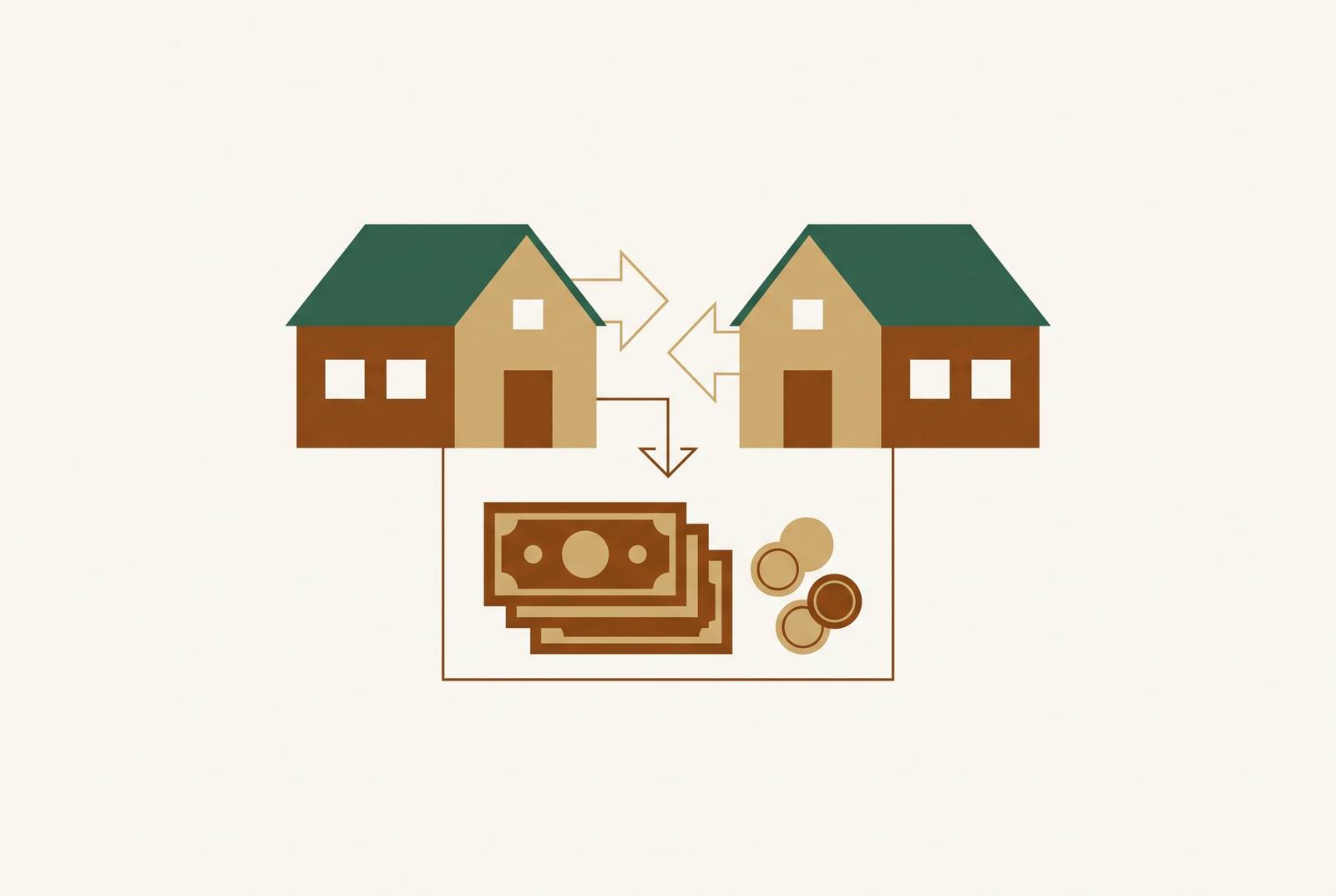
Boot is the piece of a 1031 exchange that doesn't defer, and it takes three distinct forms that most investors never fully separate in their heads until the tax bill arrives. Most of that surprise is avoidable, too. Boot isn't a penalty for a mistake. It's a structural mismatch between cash, debt, and value that gets locked in weeks before closing, one that can almost always be engineered away if someone catches it in time.
Start with what boot is not. A 1031 exchange that produces boot is not a failed exchange. A failed exchange happens when the exchanger never acquires like-kind property, misses the 45-day identification window or the 180-day closing deadline, uses the property for personal reasons, or gets classified by the IRS as a dealer rather than an investor. None of the gain defers in that scenario. Boot is milder: the exchange goes through, the like-kind requirement gets met, and a slice of the gain still gets taxed because of how the numbers landed. The word itself never appears in the Internal Revenue Code. Practitioners borrowed it from older tax parlance meaning "something extra thrown in," and the industry has used it that way since.
Treat boot as a structural outcome, not a penalty, and the whole subject gets easier to manage. It shows up when the money and the debt don't line up the way the rules require. Because it's structural, it's fixable in advance far more often than people assume: most of the fixes are just arithmetic done a week earlier than usual.
The three forms boot takes and how each one is triggered
Cash boot is the most intuitive, and the least forgivable. It's any sale proceeds that never make it into the replacement property: an investor sells for a given amount and reinvests less, pulls cash out of escrow before it reaches the qualified intermediary, or just has money sitting unused when the exchange period closes. The gap between what came out and what went back in is cash boot, full stop.
Mortgage boot, sometimes called debt relief boot, trips up otherwise careful investors because it punishes a mistake most people don't know they're making. It triggers when the debt on the replacement property comes in lower than the debt paid off on the relinquished property. The IRS treats a reduction in debt as if it were cash handed to the exchanger, even when every dollar of actual equity got reinvested. Sell a property carrying a larger mortgage, replace it with one carrying a smaller one, and that difference is mortgage boot, regardless of what happened with the cash. The fix is to bring extra cash to the closing table to cover the shortfall. That extra cash offsets the reduced debt, and the boot disappears.
Personal property boot covers anything in the deal that isn't real property: furniture, equipment, stocks, bonds, notes, partnership interests. Since the Tax Cuts and Jobs Act, only real property qualifies for 1031 treatment, so partnership interests can count as personal property. Receiving them in an exchange creates boot even when the deal feels like straightforward real estate. Sell an apartment building with furniture bundled into the purchase price, and the fair market value of that furniture is boot, taxable the same year, no exceptions.
Installment notes received as part of the deal are boot too, though Section 453 lets the gain on that portion spread out over the life of the note instead of hitting all at once.
Overlooked triggers, boot that surprises even experienced investors
Paying off a mortgage in full at closing feels like a non-event. The seller never touches the payoff money; it goes straight from escrow to the lender. The IRS doesn't see it that way. Using sale proceeds to retire a loan is treated as if the exchanger received that cash directly, so the entire payoff amount becomes boot, taxed as capital gain.
Closing costs are the quieter trap. Some costs qualify as exchange expenses and reduce what the QI has to reinvest without creating any tax exposure, mainly things tied directly to the sale transaction. Others don't qualify: tenant security deposits, prorated rent, certain administrative fees. Pay those out of exchange proceeds and the reinvested amount drops dollar for dollar, which is cash boot by another name. Prorated property taxes paid the same way cause the identical problem. Non-qualified expenses need to come out of personal funds, kept entirely separate from the money sitting with the QI. Simple in concept, easy to forget under closing-day pressure.
Improvement exchanges carry their own version of this risk. Structure a build-to-suit, let the construction schedule run past the 180-day window, and whatever improvement money never got spent becomes boot. The clock doesn't pause for a contractor running behind.
The most counterintuitive trigger: buying a more expensive replacement property does not automatically protect against boot, and treating price tag as a proxy for equity is the single most common mistake in this entire subject. An investor sells a mortgaged property, buys something of higher value with a larger down payment, and assumes the higher price tag settles the matter. If the equity reinvested is less than the equity that came out, the difference is still cash boot, no matter how much more the new property costs on paper. Equity and debt both have to be tracked separately, to the dollar. Conflating "more expensive" with "more debt replaced" is where a lot of otherwise careful investors get it wrong, and it's the error worth guarding against hardest, because it feels like diligence while it's happening.
Changing the title-holding entity partway through an exchange can undo the whole structure, too. Vesting has to stay consistent from the relinquished property through the replacement property. Restructuring ownership after the first closing can nullify the deferral entirely.
How boot is taxed: rates, ordering rules, and what depreciation recapture changes
Boot is generally taxed as capital gain, at federal rates between 15% and 20% depending on income, with state tax layered on top where it applies.
Depreciation recapture changes that math, and always against the exchanger. Recapture gets taxed first, ahead of the capital gains calculation, at a flat 25% federal rate, higher than the top capital gains bracket. An investor who mentally budgets for a 20% hit on boot gets blindsided when the portion tied to prior depreciation deductions comes in five points higher than expected. This is the number to anchor on, not the headline capital gains rate: recapture is where the real damage sits.
Two situations push boot into ordinary income territory entirely. Property held under a year produces short-term gain, taxed as ordinary income, and any boot from that sale follows the same schedule. Personal property boot, the furniture-and-equipment category, is also generally treated as ordinary income rather than capital gains.
One netting rule is worth knowing cold: cash boot paid by the exchanger can offset cash boot received, but only when both happen at the same closing, on the same transaction. It's not a pool to draw against across the whole exchange. Even with boot on the table, the rest of the gain, the properly reinvested portion, stays deferred. Boot taxes a slice. It doesn't unwind the whole exchange.
The three rules that eliminate boot entirely when followed together
Three conditions, met simultaneously, produce a fully deferred exchange with zero boot. Skip any one of them and boot shows up somewhere in the math, whether the investor sees it coming or not.
Buy equal or greater value: the replacement property, or properties combined, has to match or exceed what the relinquished property sold for. Spend all net equity: every dollar the QI holds needs to go into the replacement purchase, nothing diverted, nothing left idle. Replace the debt: the loan on the new property has to equal or exceed the loan paid off on the old one, and any shortfall gets covered with additional cash from the exchanger, never left as a gap.
Get the first two right, and the third tends to follow on its own, since the arithmetic only balances if enough debt or cash fills whatever hole remains. That's not luck. It's a direct consequence of how the value and equity targets constrain the debt figure.
Personal property needs to come out of the deal as a separate transaction, paid for with funds from outside the exchange so it never touches the qualified intermediary's account. Non-qualifying closing costs, tenant deposits, prorated rent, similar fees, get paid from personal funds too, never from exchange proceeds.
Identification strategy matters just as much as the closing math. Use the three-property rule, the 200% rule, or the 95% rule correctly, and an investor gets room to find a replacement that actually hits the value and debt targets, instead of settling for whatever's available and under-shooting the requirement.
When some boot is intentional, and how to contain the tax damage
Not every investor is trying to hit zero, and that's a reasonable call. A life event, an unexpected capital need, or a decision to simplify a portfolio can make accepting some boot worth the tax cost. The actual mistake isn't taking boot on purpose. It's skipping the tools that contain it, out of inattention rather than choice.
A Delaware Statutory Trust, or DST, is one of those tools. A DST is a fractional ownership structure in real estate that qualifies as like-kind replacement property under Section 1031. Because investors can put in almost any dollar amount, a DST lets someone reinvest the exact leftover sum that would otherwise surface as cash boot. Minimum investments in these structures tend to run low, which makes it possible to size the allocation down to the precise excess. DSTs also work as backup identifications, insurance in case a primary replacement property falls through before the 45-day window closes.
One limit here isn't optional or negotiable: depreciation recapture cannot be pushed into a DST. Entering a DST triggers a recapture event on its own, so the 25% recapture portion never gets sheltered by this strategy, no matter how the rest of the boot gets handled.
The installment note is the other route. Instead of taking boot as cash, the exchanger takes a note from the buyer, and under Section 453 the gain recognition can spread out over time rather than landing all in the exchange year. Both strategies have to get built into the deal before closing.
Why the QI you choose directly affects your exposure to accidental boot
The qualified intermediary holds every dollar of exchange proceeds. If the exchanger touches that money at any point, even for a moment, constructive receipt kicks in, and that doesn't just create boot. It kills the exchange outright and makes the entire gain taxable immediately, not just a slice of it.
The QI industry is largely unregulated, and oversight varies significantly from state to state. That single fact should change how anyone shops for one. Fund security and technical competence vary enormously from one intermediary to the next, and a lot of accidental boot traces straight back to QI-side mistakes: closing costs misclassified as qualifying when they aren't, funds released a step too early, debt-replacement math calculated wrong, non-allowable expenses never flagged before closing.
Pick the QI the way you'd pick a surgeon, not a caterer. A rotating team, or a commissioned salesperson working the file, is a worse structure than a single senior exchange officer who stays with the transaction from the first phone call through the final closing. That continuity is what catches a calculation problem before it becomes a tax event, and it's the difference that matters more than any brochure line about service quality. Fund security matters just as much: proceeds belong in segregated, FDIC-insured accounts, never commingled with the intermediary's own operating funds. Fee structure deserves scrutiny too. A QI that charges no exchange fee while passing interest earned on held funds back to the client behaves nothing like one that quietly retains it. Technology that logs every fund transfer and enforces separation of duties cuts down the manual error that produces boot in the first place. Exchanges rarely close on a tidy schedule, and availability on evenings and weekends, right when boot-related questions tend to surface before a deadline, is not a minor convenience.
Deferred is built around this exact list: no exchange fee, a share of interest income passed to the client, segregated FDIC-insured accounts covering well into the nine-figure range, a single senior exchange officer assigned to each file, and support seven days a week from 8am to midnight EST. The structure exists to catch the errors that turn into boot before they turn into a tax bill.
Whatever the outcome, an exchange with boot still gets reported on IRS Form 8824 for the tax year the relinquished property transferred. A qualified intermediary should be able to support that filing with clear records of the transaction, not leave the investor to piece the numbers back together months later, with a return already overdue.
Sources
- 1031 Exchange Boot: What It Is, How To Calculate, and Rules To Consider
- ‘Boot’ in a 1031 Exchange: What It Is and How to Minimize Tax Implications
- Understanding the taxable 1031 exchange boot: Cash boot, mortgage boot, and tax deferral
- Boot in a 1031 Exchange: What It Means & How to Avoid It
- What is a Mortgage Boot in a 1031 Exchange?
- Boot in a 1031 Exchange: Cash, Mortgage, and Personal
- 1031 Exchange Boot: How It Happens & How to Avoid It
- dillelaw.com