Using a 1031 Exchange to Move Real Estate Investment to Another State
Defer taxes across state lines, but watch for hidden state-level costs and timing traps.
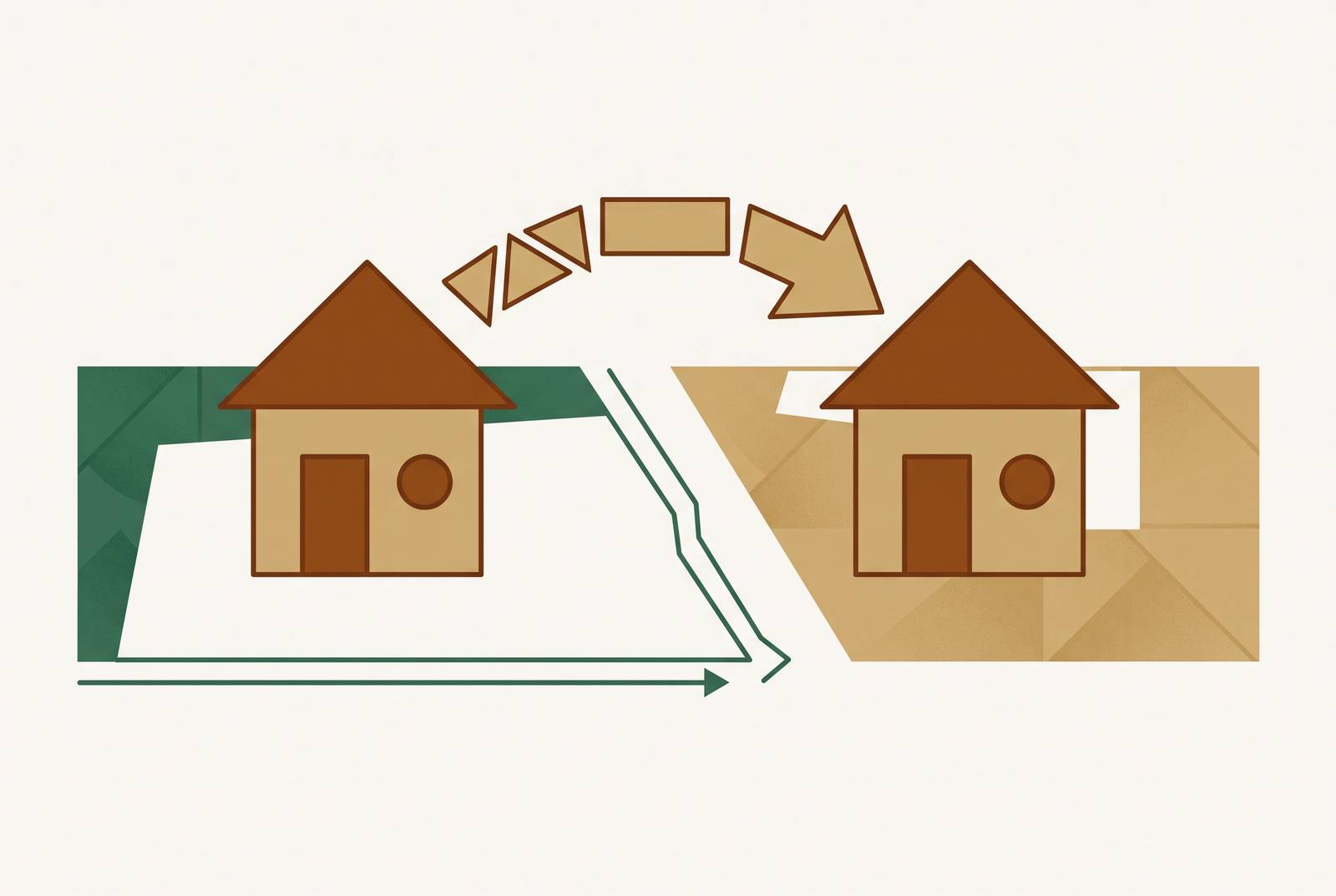
A 1031 exchange lets an investor sell real estate in one state and reinvest the proceeds into property in another without triggering an immediate capital gains tax bill, and the reasons investors choose to make that move across state lines are substantive. A 1031 exchange works as a repositioning tool as much as a deferral mechanism, moving capital toward markets with stronger tenant demand, more favorable property-tax structures, or regulatory climates that suit the investor's goals, all without the IRS treating the sale as a taxable event. The flexibility extends to asset class as well as geography: because any real estate held for investment or business use qualifies as like-kind to any other such real estate, a single-family rental in one state can become a multifamily building, a parcel of raw land, or a commercial property in another. None of this changes the federal framework the exchange runs on. Crossing a state border doesn't alter the IRS rules that govern the transaction, but it adds a layer of state-level consequence that many investors underestimate, and that layer is what the rest of this piece addresses.
How the federal exchange structure works across state lines
The federal rules behind a 1031 exchange do not change based on geography. A transaction that moves an investor's capital from a relinquished property in one state into a replacement property in another follows the exact same federal tax framework as an exchange where both properties sit in the same county. Instead of recognizing gain on the sale, the investor defers it, carrying the gain forward into the replacement property through a reduced tax basis. If the investor touches those funds, even for a moment, the exchange fails. The exchange agreement has to be in place before the sale closes; there is no mechanism for bringing in a QI after the fact and retroactively structuring the deal.
Timing runs on two clocks that start the moment the relinquished property transfers, and both apply identically whether the replacement property sits three miles away or three states away. The investor has 45 days to identify replacement property and 180 days total to close on it, the two periods running simultaneously rather than back to back. Neither deadline moves for ordinary circumstances. Extensions exist only for federally declared disasters, for terroristic or military actions, or for taxpayers serving in a combat zone, and weekends and holidays count toward both windows regardless of how inconvenient that proves. Identification has to be specific and has to reach the QI in writing: a street address or legal description qualifies, while a description like "a property in Austin" does not, and verbal notice carries no weight. Both the relinquished and replacement properties must be held for investment or business use, which rules out primary residences and fix-and-flip inventory on either end. To defer the full tax liability, the replacement property has to equal or exceed the relinquished property in purchase price, equity, and debt. Falling short on any one of those three creates boot, and that is where the clean federal picture starts to get complicated.
What "boot" means in a cross-state exchange
Boot is any value an investor receives through the exchange that does not qualify for tax deferral, and it is the most common way a technically compliant 1031 exchange still generates a tax bill. Cross-state repositioning creates several paths to boot that an investor moving within a single familiar market would be less likely to encounter. Debt-relief boot commonly trips up investors making exactly the kind of move that draws them across state lines. An investor carrying heavy mortgage debt on a property in a high-cost market, then buying into a lower-cost market without matching that debt level, reduces the liability carried into the replacement property, and the IRS treats that reduction as boot even though no cash changed hands.
Interest adds a third, subtler version of the problem. The remedy for most of this is arithmetic done early. Fees, loan balances, and replacement property values should be modeled before the investor commits to any specific replacement property, and that modeling needs to happen before the 45-day identification clock starts running, not after the investor has already locked in a choice under deadline pressure.
Where federal deferral ends and state tax obligations begin
Deferring a gain at the federal level does not automatically defer it at the state level, and the space between those two outcomes can quietly erode the value of an exchange that was otherwise executed without a single federal misstep. States do not all treat Section 1031 the same way. Some conform fully to federal treatment, some do not conform at all, and others conform only partially or attach additional conditions the investor has to satisfy separately. This means an investor's tax team has to evaluate both the state where the relinquished property sits and the state where the replacement property will be purchased, since either one can introduce an obligation the federal exchange does nothing to address.
New York offers a concrete illustration of how this plays out. An investor who sells property in New York and exchanges into property outside the state still receives New York State deferral alongside the federal deferral, because New York conforms to federal Section 1031 treatment. The deferred New York-source gain remains taxable to New York when the replacement property is eventually sold in a taxable transaction, even though that sale may happen years later and in a different state. This single example should not be read as a stand-in for how every state behaves. State tax codes vary too widely for any general guide to substitute for direct review with a tax advisor who can look at the specific states involved in a given transaction.
It's also worth being careful about the assumption that a state with no income tax automatically produces a better outcome. The net economics of relocating capital into either state depend on the full cost structure an investor will face, not on the income tax line alone. Confirming how a given state treats the deferred gain, and what it will cost to hold property there going forward, is work that belongs with the investor's tax team before a replacement property gets selected, not after the exchange has already closed.
Withholding requirements that apply when selling property in certain states
Some states require the buyer or the closing agent to withhold a portion of the sale proceeds from a seller who does not reside in that state, and this requirement applies at the moment of closing whether or not the seller is running a 1031 exchange. An investor who owns property in a state they do not call home may face mandatory withholding on the gross sale price or on the gain itself, and that withholding happens automatically unless the investor takes action to prevent it.
The timing creates a real problem for exchange mechanics. Withholding pulls funds out of the sale proceeds before or at the exact moment those proceeds are supposed to flow to the qualified intermediary, and if the investor hasn't addressed that withholding in advance, the funds reaching the QI come up short. A shortfall at this stage can create inadvertent boot or leave the replacement property purchase underfunded, either of which undermines the deferral the investor was counting on. The same consideration runs in the other direction: an investor acquiring property in a new state should also check whether that state imposes withholding obligations on future sales, since that becomes a live issue the day the investor eventually decides to exit the replacement property.
Future state tax obligations that follow the replacement property, including clawback risk
A state's claim on a deferred gain does not necessarily end when the investor sells the relinquished property and moves on. Several states assert tax jurisdiction over gain that was deferred at the federal level when the original sale took place within their borders, and that claim can follow the investor even after the replacement property has been sold somewhere else entirely, long after the investor has stopped living in or investing in the original state. This is generally referred to as clawback: the state where the original sale occurred treats the eventual taxable sale of the replacement property, wherever that sale happens, as the moment the deferred gain becomes real and collectible.
None of this is cause for alarm, but it does call for planning earlier than most investors think to do it. Geographic diversification through a 1031 exchange is a sound strategy on its own terms, but an investor who executes a cross-state exchange without first understanding the clawback exposure tied to the source state can end up facing a state tax bill they did not anticipate at the end of a future exchange chain, sometimes years after the original transaction. Confirming this exposure belongs in the planning conversation before the investor selects a replacement state, not as a surprise discovered after the fact.
Delaware Statutory Trust interests qualify as eligible replacement property under a 1031 exchange and can serve as a backup or bridge option when an investor has not identified a direct replacement property within the 45-day window. These are fractional interests in institutional-grade real estate, and they come with multi-year holding periods and no established secondary market, so an investor who buys into a DST should plan for an extended hold rather than a quick exit. Investors considering a DST as part of a cross-state exchange need to weigh that holding-period constraint against their broader exit planning from the start. Separately, the stepped-up basis rule at death offers a legitimate long-term path to eliminating accumulated deferred gain entirely, since property held until death rather than sold in another taxable transaction passes to heirs at its fair market value rather than its original deferred basis. That path depends on the investor holding the property rather than exchanging or selling it again, and it is a decision made over the course of an estate plan.
Common mistakes that disqualify or degrade a cross-state exchange
Most exchange failures trace back to a short list of avoidable errors, and the complexity of operating in an unfamiliar state market tends to make each of them more likely rather than less. Taking constructive receipt of funds is the most severe: even briefly depositing sale proceeds into a personal account before passing them to the qualified intermediary can invalidate the entire exchange, since proceeds are required to flow directly from the closing agent to the QI without passing through the investor's hands. Engaging a QI too late produces the same result through a different path. The exchange agreement must be executed before the relinquished property closes, and an investor who finds a replacement property first and then tries to retrofit an exchange structure around it has already lost the deferral before the paperwork even starts. Vague identification causes a similar failure for a different reason: describing a target property as "a commercial building in Nashville" rather than naming a specific street address or parcel number does not satisfy IRS requirements, and investors working in markets they don't know well are especially prone to identifying properties they haven't fully evaluated, which leads either to descriptions too vague to count or to properties that later fall through.
Assuming a trusted advisor can double as the qualified intermediary is another frequent misstep. The IRS prohibits anyone who has represented the investor in the prior two years, including an attorney, a CPA, or a real estate agent, from serving in that role, and the QI has to be a genuinely independent third party with no prior relationship to the transaction. Overlooking debt reduction as a source of boot rounds out the pattern among investors moving from high-cost, highly leveraged markets into lower-cost markets with lighter debt loads, since the reduction in mortgage liability counts as boot even when it feels like a financial improvement rather than a tax event. Finally, missing a state withholding deadline in the relinquished-property state can result in funds being withheld that were meant to flow directly to the QI, disrupting the exchange timeline or creating boot that could have been avoided with an exemption application filed before closing.
How exchange funds are held and protected during the interstate transaction period
Where exchange funds sit during the 180-day transaction window is as much a security question as a legal one, and the stakes rise for investors running a cross-state exchange who may be working with a qualified intermediary they found remotely and have never met face to face. Qualified intermediaries operate without federal regulation. There is no standard licensing requirement across the industry, no mandatory bonding, and no federal insurance protecting exchange funds while they sit with the QI. The investor's only real protection comes from the contractual terms laid out in the exchange agreement and from the QI's own internal financial controls. The burden of due diligence falls on the investor before the funds ever leave the closing table.
The structural safeguard to insist on is segregation. Exchange funds should sit in dedicated, qualified escrow or qualified trust accounts held in the investor's name or structured under a dual-signature arrangement that prevents unilateral withdrawal, and those funds should never be commingled with the QI's own operating funds. Cases of total fund loss have occurred in this industry when investors selected a QI without scrutinizing how that firm held client funds, and a cross-state transaction, with its added deadlines, its withholding questions, and its unfamiliar market pressures, is not the moment to treat that scrutiny as optional.